
You have been Successfully Subscribed to Newsletter


Best Tyre Company in India for Every Budget
Apr 09, 2026 • 10 Min Read
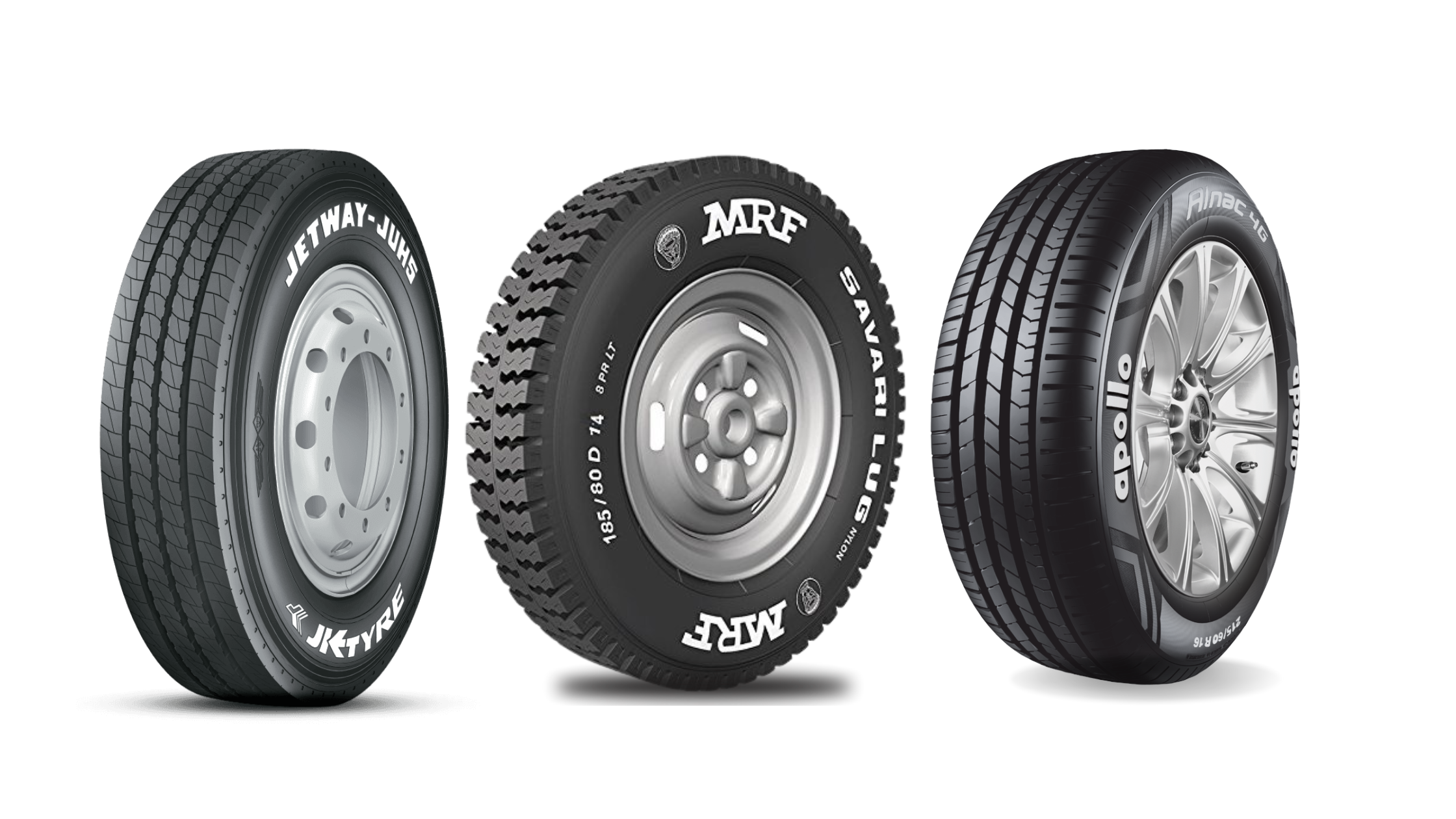
Indian roads demand tyres that can handle everything from monsoon floods to scorching summers. With around 260 million two-wheelers and 50 million cars running across diverse terrains, choosing the right tyre company isn't just about price; it's about safety, performance, and value for money.
As a buyer, you should thoroughly evaluate premium international brands and reliable domestic manufacturers on all aspects before choosing the best tyre company in India. This guide will explore what you need to take into consideration before choosing a tyre.
Overview of Tyre Industry in India
India's tyre industry stands as a global manufacturing powerhouse, supplying both domestic and international markets. The sector has transformed from basic manufacturing to advanced technology-driven production, making it increasingly competitive for consumers.
Market Size and Growth Trends
The Indian tyre industry demonstrates a remarkable growth trajectory. The market reached USD 13.4 billion in 2024. with projections indicating it will touch USD 27.6 billion by 2033, growing at 7.6% annually. This expansion reflects India's increasing vehicle ownership and infrastructure development.
Key growth drivers include:
- Rising vehicle production: 3.10 crore vehicles manufactured in FY 2024-25.
- Strong export performance: Tyre exports reached ₹25,051 crore in FY25.
- Electric vehicle adoption: The EV tyre market EV tyre market is projected to reach 48.39 million units by 2030.
Key Players in the Indian Tyre Market
Five major companies control 95% of India's tyre market. Apollo Tyres at ₹6,423.59 crore.
Market Leaders:
- MRF Limited: Holds a 30% market share, with a turnover of 3 billion dollars in 2024
- Apollo Tyres: Strong OEM partnerships, exports to 100+ countries
- CEAT Limited: 8% overall market share, with the production exceeding 48 million tyres in 2024
- JK Tyre: A pioneer of radial technology, the company has an extensive network of 6,000+ dealers and 650+ brand shops, with an annual production capacity of 35 million tyres.
- Balkrishna Industries (BKT): With a 6% market share, the company specialises in off-highway tyres
Top Tyre Companies in India
Understanding each company's strengths helps you identify the best tyre company in India for your specific requirements and budget constraints.
Company Profiles and History
MRF: The company began as a balloon-making unit in Chennai during the 1940s and now operational revenue nearly doubled to ₹28,153 crore in 2025 from ₹14,929 crore in 2017, making it India's leading tyre brand.
Apollo Tyres: : Established in 1972, the company operates seven facilities across Asia and Europe. It excels in OEM fitments and serves as the first choice for many car manufacturers.
CEAT: Founded in 1958 under RPG Enterprises, CEAT operates six manufacturing plants manufacturing plants and maintains a strong dealer network across India.
JK Tyre: The company pioneered radial technology in India (1977) and ranks among the top 25 tyre companies globally.
Popular Tyre Models and Technologies
Leading companies offer advanced technologies for different market segments:
|
|
|
|
|
|---|---|---|---|
| MRF | Advanced compounds | ZVTS, Wanderer | Long‑lasting tread |
| Apollo | Eco‑oriented design | Alnac 4G, Amazer | Low rolling resistance |
| JK Tyre | JETOCT technology | UX Royale Green | 8% fuel savings |
| CEAT | 3D Groove technology | SecuraDrive | Enhanced grip |
| Continental | Concept Tyres (Ensuring Sustainable Solution) | ContiMaxContact MC5, Conti4x4Contact | High‑speed stability, low‑noise level |
| Bridgestone | Non‑pneumatic tyre technology “Air Free Concept” | ECOPIA, POTENZA | Minimal rolling resistance, road‑gripping performance |
| Michelin | Tyre tread technologies | Michelin X ONE MULTI T | Superior tread life |
Market Share and Customer Ratings
MRF maintains a leadership position with a 30% market share with ten manufacturing facilities. Apollo Tyres holds 18% market share with seven manufacturing facilities across India and Europe.
Customer satisfaction varies by segment:
- Premium segment: MRF leads in quality perception
- Value segment: CEAT offers competitive pricing
- Performance segment: Apollo excels in OEM partnerships
Types of Tyres Available in India
The car tyre brands in India cater to diverse vehicle segments, each with specific performance requirements and price points.
Passenger Car Tyres
Passenger vehicle tyres account for over 50% of the Indian tyre market. Radial tyres dominate due to superior fuel efficiency and durability compared to bias-ply construction.
Key Features:
- Tubeless technology for improved safety
- 15–21-inch rim sizes
- Low, medium, and high-price segments available
- Average lifespan: 40,000-50,000 km under normal conditions
Two-Wheeler Tyres
Two-wheeler tyres represent the largest vehicle segment, driven by high scooter and motorcycle ownership across India. The two-wheeler tyre market size reached USD 3.39 billion in 2024. By 2030, the market size is projected to be USD 6.12 billion.
Considerations:
- Puncture resistance crucial for Indian roads
- Monsoon performance requirements
- Electric two-wheeler specific designs
- Tubeless options
Commercial Vehicle Tyres
The Indian commercial vehicle tyre market size, which stands at an estimated USD 30 billion in 2025, is projected to be USD 51 billion by 2029, growing at an estimated CAGR of 8% during the forecast period.
Performance Factors:
- Total cost of ownership for fleet operators
- Load capacity and durability requirements
- Fuel efficiency likely to improve by 3-5% with retreaded tyres
- Retreading and lifecycle management
Off-road and Specialty Tyres
India's USD 14.78 billion off-highway tyre market is estimated to reach USD 27.74 billion by 2033 at a Compounded Annual Growth Rate (CAGR) of 7.25%. Factors driving this tyre market segment forward include increasing mining activities and rapid infrastructure development across India.
Factors to Consider When Choosing a Tyre Company
Selecting India's best tyre company requires evaluating multiple factors beyond just price to ensure optimal performance and value.
Tyre Quality and Safety Standards
Look for ISO 9001 certification and BIS compliance. These government-approved quality standards ensure safety and reliability, fostering consumer confidence. Maintaining recommended speed ratings ensures stability and responsive handling at high speeds.
Quality Indicators:
- International certifications (DOT, ECE)
- BIS star-labelling compliance
- Manufacturing facility standards
- Testing protocols and validation
Price-Performance Balance
High-quality tyres provide fuel cost savings through reduced rolling resistance. Look for tyres that reduce rolling resistance to contain fuel consumption. Studies indicate up to 30% fuel consumption and CO2 emissions due to rolling resistance, a force retarding the vehicle's motion on a surface.
Cost Considerations:
- Initial purchase price
- Fuel efficiency benefits
- Maintenance requirements
- Replacement frequency
Warranty and After-Sales Service
Most reputable brands offer standard 2–6-year warranties against manufacturing defects. Leading tyre makers, such as MRF and Apollo Tyres, provide pro-rata replacement based on remaining tread depth.
Availability and Dealer Network
Strong dealer networks ensure easy access and service. JK Tyre operates 6,000+ dealers with 650+ brand shops, while CEAT maintains 4,500+ dealers nationwide. Apollo Tyres services over 5,835 authorised dealers.
Latest Innovations and Technologies in Tyres
Technology advancement drives the tyre industry forward, offering better performance, safety, and environmental benefits for consumers.
Fuel-Efficient and Eco-friendly Tyres
Eco-friendly tyres incorporate sustainable rubber and silica-based compounds with innovative tread designs. JK Tyre's UX Royale Green became the first passenger car tyre with certified sustainable raw materials (ISCC).
Benefits:
- Reduced carbon footprint
- Lower rolling resistance
- Improved fuel economy
- Sustainable material usage
Run-flat and Tubeless Tyres
Tubeless tyres outpace traditional designs with superior safety profiles, including slow air leakage and better heat dissipation. CEAT introduced run-flat tyre technology, extensively tested in German laboratories.
Advantages:
- Continued driving after a puncture
- Reduced roadside emergencies
- Better heat management
- Improved safety features
Smart Tyre Technologies and Sensors
Smart tyres equipped with sensors monitor pressure, temperature, and tread wear, sending real-time data via Bluetooth connectivity. JK Tyre's smart tyres capture crucial data through ID sensors connected to smartphones.
How to Choose the Right Tyre for Your Vehicle
Making the right choice requires understanding specifications, seasonal requirements, and maintenance practices for optimal performance and longevity.
Understanding Tyre Specifications
Tyre codes like 205/65 R15 95H indicate 205mm width, 65% aspect ratio, Radial construction, 15-inch rim, 690kg load capacity, and 210km/h speed rating. Speed rating letters correspond to the maximum safe speeds the tyre can handle.
Seasonal Tyre Options in India
All-season models captured 63.12% of the Indian tyre market in 2024. These tyres balance traction on wet and dry surfaces, making them suitable for India's diverse climatic conditions, including monsoon challenges.
Tips for Tyre Maintenance and Longevity
Proper tyre pressure greatly affects lifespan. Regular wheel alignment, balancing, and rotation extends tyre life. Smart tyre technology delivers 4-5% higher fuel efficiency while reducing carbon emissions.
Maintenance Schedule:
- Monthly pressure checks
- Quarterly rotation
- Annual alignment inspection
- Regular visual inspections
Pricing and Availability Across India
Understanding pricing structures and purchasing options helps you find the best value for your specific budget and requirements.
Price Comparison of Popular Tyre Brands
Car tyre prices are based on several factors, such as the vehicle brand, raw materials used, and the overall cost of manufacturing tyres.
For instance, CEAT also offers three tyres for this car type, with the MRP ranging from ₹5,900-7,900.
Disclaimer: The prices quoted above are based on the information available on the official website of these tyre makers.
Price Segments:
- Budget: ₹2,000-3,000 per tyre
- Mid-range: ₹3,000-6,000 per tyre
- Premium: ₹6,000+ per tyre
Disclaimer: These indicative average prices are subject to change. Please verify with the manufacturer/dealer.
Where to Buy: Online vs Offline
Online platforms allow price comparison and feature analysis. E-commerce integration drives down prices while companies adapt to capture online market share.
Seasonal Discounts and Offers
Government projects, such as Bharatmala and smart city projects, accelerate vehicle usage, increasing replacement cycles. Approved by the government of India in 2017, the Bharatmala project is expected to cover a length of 54,800 km to enhance connectivity and decrease the overall logistic cost.
Further, online platforms offer cashback and discounts on purchases during promotional periods.
Smart Tyre Protection with Royal Sundaram
Choosing the best tyre company in India for your budget ensures optimal performance. However, you need protection for tyres as they may go over diverse terrains. Royal Sundaram General Insurance offers comprehensive tyre cover as an add-on to your vehicle insurance policy. The cover applies to tyre damage caused due to impact cuts, bursts, hard braking-induced tyre flattening, etc. Policyholders can also avail of roadside assistance at its extensive network of 7,600+ authorised cashless garages.
Frequently Asked Questions (FAQs)
MRF is generally considered the best all-round tyre company for passenger cars in India, thanks to its strong durability, reliable performance on Indian roads, and wide availability. Apollo and JK Tyre follow closely, offering good grip, comfort, and more budget-friendly pricing. Premium brands like Bridgestone or Michelin offer superior comfort but come at higher prices.
When buying tyres in India, consider quality indicators such as tread design, braking performance, and adherence to safety standards. Also, evaluate pricing, warranty coverage, and the brand’s after-sales service network to ensure long-term value and easy support.
Yes, tubeless tyres are better for Indian roads as they’re safer during punctures, lose air slowly, and need less maintenance. Tube tyres are cheaper but suited mainly for older vehicles or very rough terrains.
Replace your vehicle tyres when the tread depth drops below the wear indicator, typically after 40,000–50,000 km, or sooner if you notice cracks, bulges, uneven wear, or if the tyres are older than 5–6 years.
MRF, Apollo, JK Tyre and CEAT deliver durable, high-load, cost-effective commercial tyres.
These include fuel-efficient compounds, run-flat designs, smart sensors, eco-friendly materials, low-noise tread patterns, and silica-based rubber technologies.
Yes, you can buy authentic tyres on the tyre maker's official website or app, or even on e-commerce platforms that offer attractive discounts/cashback on purchases. However, do read the user reviews to know different experiences (possibly involving defective items) to make the right choice.


Discover the perfect insurance plan for you!
Get your free quote now!
Get StartedBy Clicking on Get Started, You agree to our Terms and Conditions and override DNC/NDNC registration.
More like this
View more

.png)