
You have been Successfully Subscribed to Newsletter


Types of Number Plates in India: Rules, Formats, and Designs Explained
Apr 13, 2026 • 10 Min Read
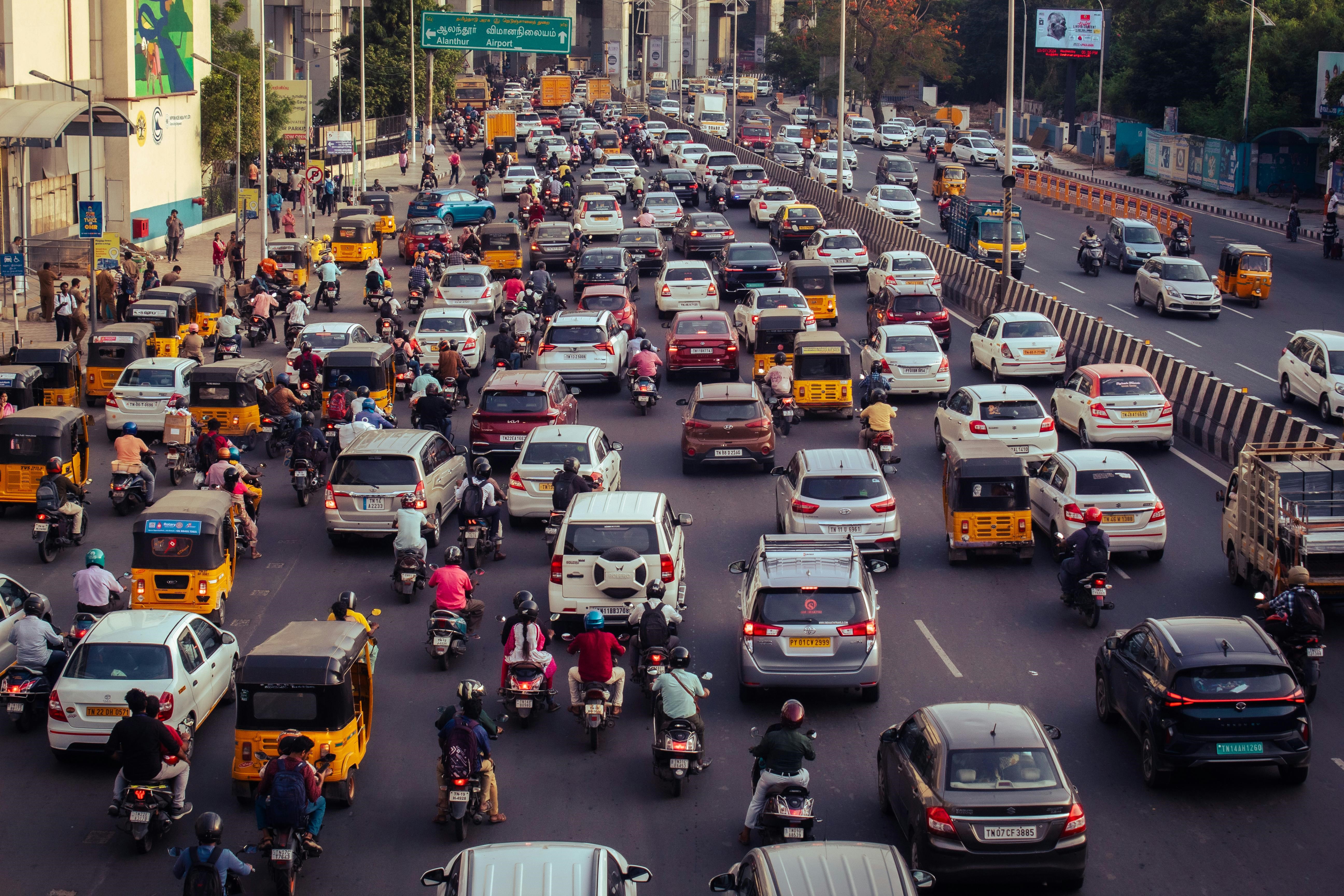
Every motor vehicle in India must display a unique registration number. This registration includes a state/UT code, the issuing Regional Transport Office (RTO) code, and a unique identifier, reliably linking a vehicle to its origin. The government mandated High Security Registration Plate (HSRP) adds tamper resistant aluminium plates with embossed characters, a chromium hologram, a laser etched permanent identification number (PIN) and non reusable locks to prevent forgery.
Under the vehicle’s use. With more than 354 million registered motor vehicles in India as of March 2022, differentiating between the types of number plates in India and understanding how they work is important for every vehicle owner. This blog explains the primary plate colour and format conventions in India, what they signify, and how compliance with these standards helps ensure legal vehicle identity and road safety.
Introduction to Number Plates in India
Vehicle registration plates form the backbone of India's transportation identification system, serving multiple critical functions beyond simple vehicle identification. These metal or plastic assemblies carry unique alphanumeric codes that, together with the colour and format, connect every vehicle to its legal owner, registration authority, and intended use category.
Purpose and Importance of Vehicle Number Plates
Registration plates serve as official identification issued by RTOs under the Motor Vehicles Act, 1988. They enable law enforcement agencies to trace a vehicle’s origin, enforce traffic laws, and investigate offences. They assist insurance companies in verifying vehicle legitimacy before issuing coverage. They also help traffic and transport authorities monitor vehicle movement, collect taxes and fees, and support quick identification of vehicles during emergencies or accidents.
Overview of Registration Authority and Legal Framework
The Motor Vehicles Act establishes the legal foundation for vehicle registration in India. The Ministry of Road Transport and Highways (MoRTH) provides central oversight and standardisation guidelines, ensuring consistency across all states and union territories.
Recent amendments effective October 1, 2020, introduced stricter regulations to combat fraudulent activities and reduce ambiguity in vehicle identification. These changes prohibit the use of regional languages, fancy fonts, and non-standard characters on registration plates, creating a uniform system across the country.
The Central Motor Vehicles Rules, especially Rule 50, govern technical specifications, including plate dimensions, font requirements, and material standards. State RTOs implement these central guidelines while managing local registration processes, vehicle inspections, and compliance enforcement within their jurisdictions.
Different Types of Number Plates in India
India’s vehicle registration system uses colour coded number plates to reflect the vehicle’s use and registration type, assisting authorities in quick identification and regulation.
Private Vehicle Number Plates
Vehicles used for personal, non-commercial transport, such as privately owned cars, two wheelers, etc., get a number plate with a white background and black letters. The registration code includes the state code, RTO (district) code, series (if applicable), and a unique number. These plates are not valid for commercial activities like paid passenger transport or goods carriage.
Commercial Vehicle Number Plates
Vehicles meant for commercial operations, such as taxis, buses, trucks, and goods carriers, carry plates with black lettering on a yellow background. Commercial vehicles follow stricter regulations including commercial driving licence requirements, periodic fitness/inspections, different insurance and tax regimes compared to private vehicles.
Temporary Number Plates
Vehicles awaiting permanent registration may be issued temporary plates. As per a 2020 MoRTH notification, such vehicles display alpha-numerals in red on a yellow background. Once permanent registration is done, the plate must be replaced with the standard permanent registration one.
Government Vehicle Number Plates
Vehicles used by government departments or the armed forces in India use registration plates different from civilian vehicles. Defence vehicles are issued special “defence registration marks” under the Motor Vehicles Act, 1988 and CMVR 1989, managed by the Ministry of Defence (MoD) rather than state RTOs. These plates feature an upward-pointing arrow (broad arrow) followed by numerals and codes indicating procurement year, base, serial number, and vehicle class. Civilian government vehicles may also have special plates assigned by protocol, making them distinct from standard state-issued plates.
In some states like Tamil Nadu and Karnataka, the prefix/series letter ‘G’ on a vehicle number plate is reserved for government owned vehicles (state or central). However, because vehicle registration norms are implemented at the state level, this does not apply uniformly across all of India. It is important to note that ‘G’ does not guarantee a government vehicle everywhere.
Diplomatic Number Plates
Vehicles belonging to foreign missions, such as embassies, consulates, diplomatic staff or international organisations, are issued plates with a blue background and white lettering. Instead of the usual state code, these plates carry mission or country specific codes such as “CD” (Diplomatic Corps), “CC” (Consular Corps), “UN” (United Nations), etc. This special status reflects their diplomatic identity and corresponding privileges under international law.
Electric Vehicle Number Plates
For battery operated electric vehicles (EVs), MoRTH issued a notification updating the colour code scheme: non transport (private) EVs get green plates with white lettering, while transport category (commercial) EVs get green plates with yellow lettering. This distinction helps authorities easily identify zero emission vehicles and apply any relevant regulations, incentives or exemptions.
Export/Trade Number Plates
Under Indian law, vehicles in the possession of dealers, manufacturers, test agencies or in transit may be issued a a trade registration mark/plate. Starting in 2020, such plates must display white letters on a red background. These plates are temporary and strictly regulated: they may be used only for testing, demonstration, transit to dealership or export facility, or delivery to purchaser, and must not be used as regular personal or commercial vehicles on public roads. Once the vehicle is permanently registered, trade plates must be replaced with standard permanent plates.
Format and Colour Codes Explained
Understanding vehicle registration formats and colour coding systems helps identify vehicle categories and ensures compliance with legal requirements. The standardised system creates uniformity across India while providing clear visual identification for different vehicle types.
Standard Alphanumeric Format
All Indian number plates follow a standard four-part alphanumeric system:
|
|
|
|
|---|---|---|
| State Code | KA | Identifies the state (Karnataka) |
| RTO Code | 05 | Regional Transport Office code |
| Series | MJ | RTO-assigned series letters |
| Unique Number | 6789 | Individual vehicle identifier |
Plates can be single-line or two-line, depending on vehicle type (e.g., motorcycles often use single-line for space constraints). This format is legally mandated under CMVR Rule 50.
Colour Codes and What They Indicate
India uses colour-coded number plates to indicate vehicle purpose, ownership, or registration type:
|
|
|
|
|
|---|---|---|---|
| White | Black | Private / non-commercial vehicles | 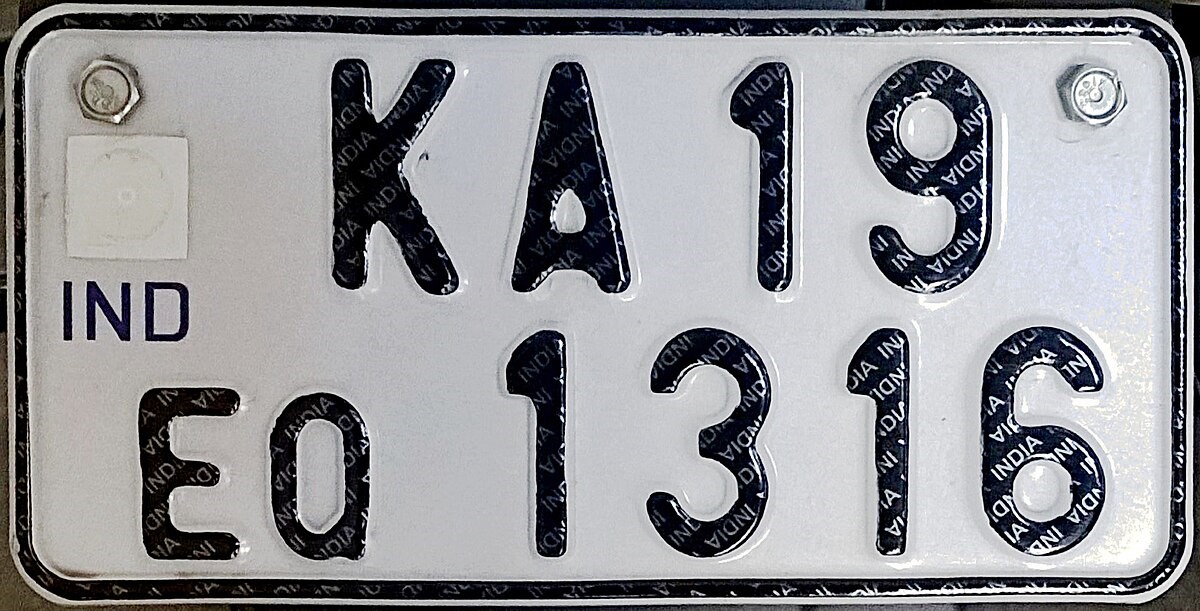 |
| Yellow | Black | Commercial transport vehicles | 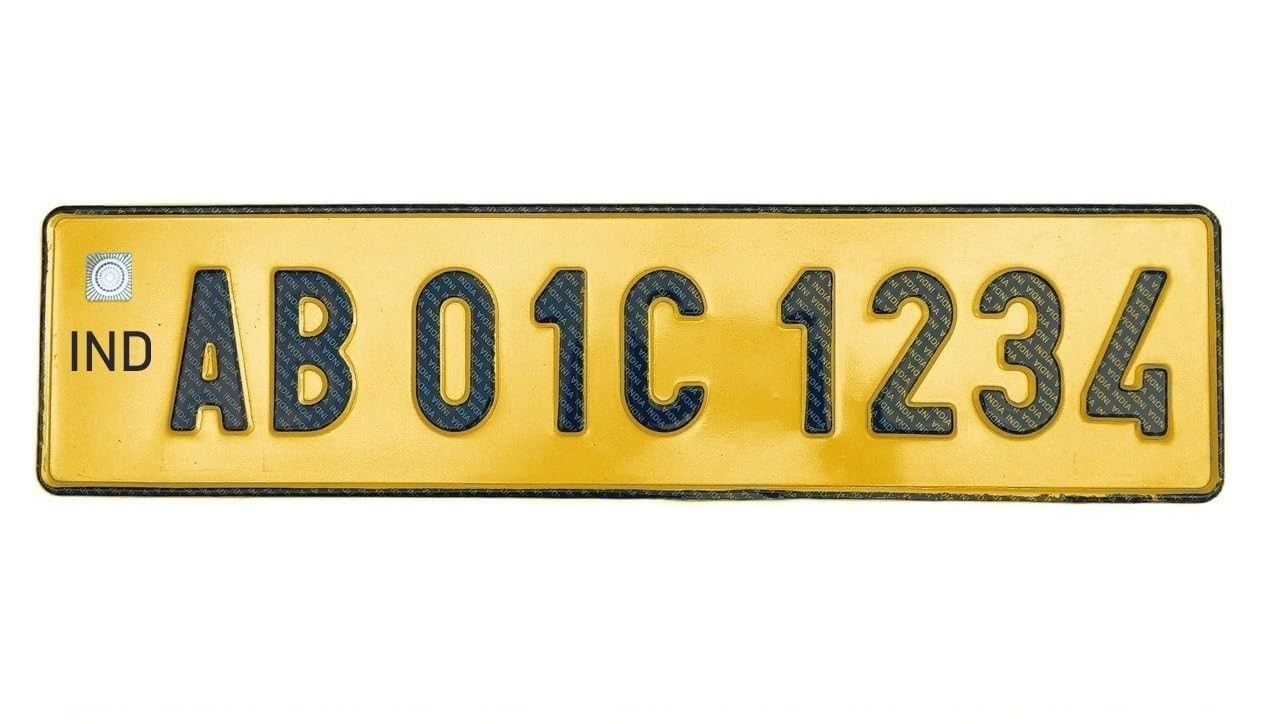 |
| Black | Yellow | Self-drive / rental / hire & drive vehicles | 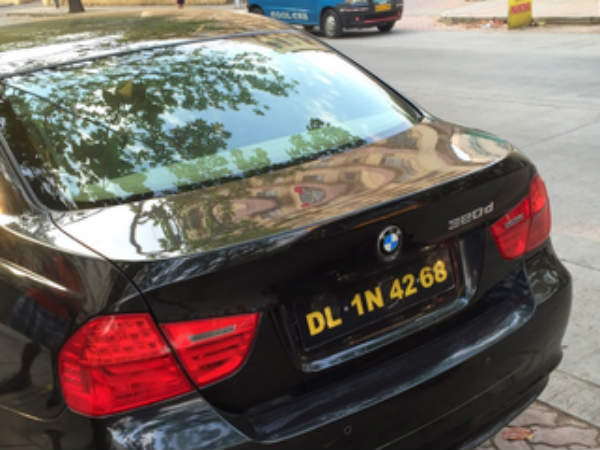 |
| Green | White (private EV) / Yellow (commercial EV) | All-electric vehicles | 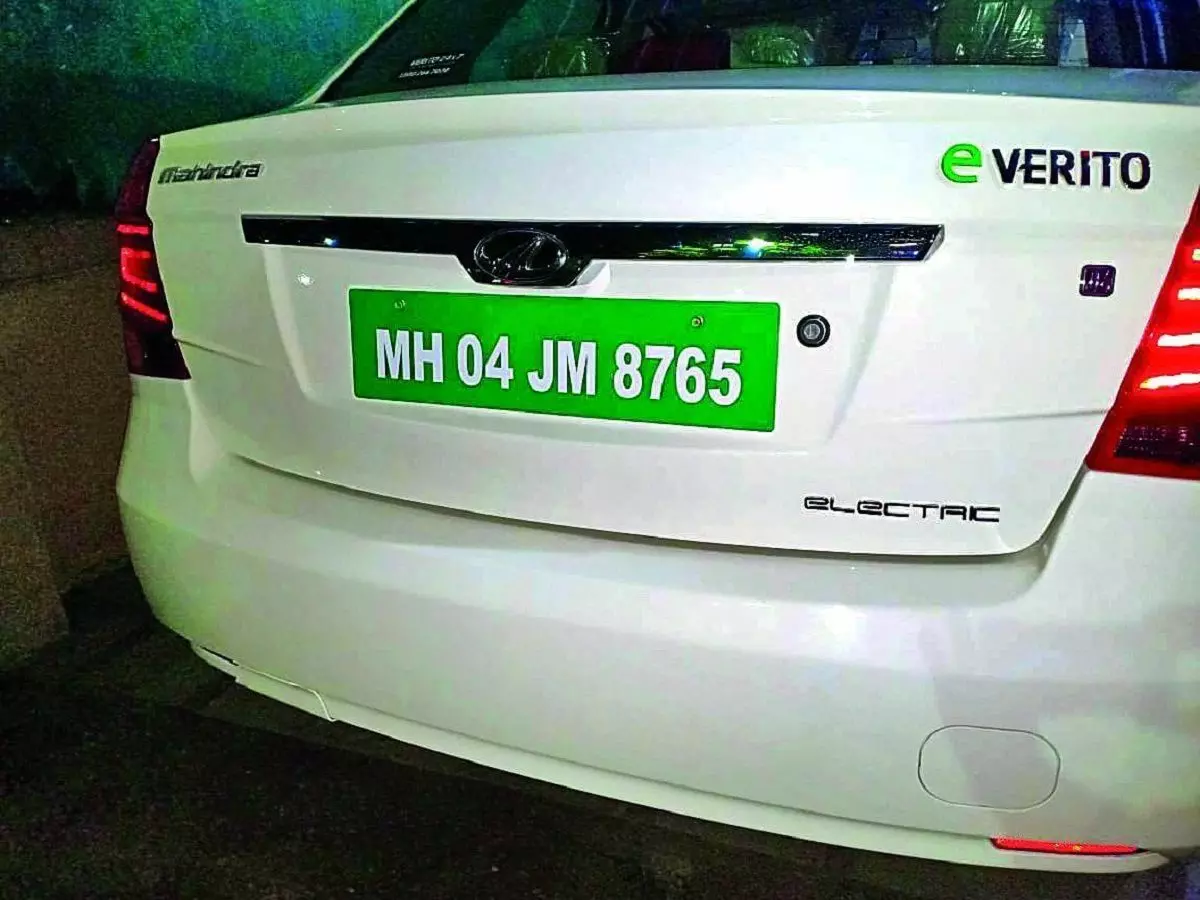 |
| Blue | White | Vehicles of foreign diplomats / consulates / international organisations |  |
| Yellow | Red | Temporary registration plates |  |
| Black (background) + special format (↑ arrow) | White (or as per spec) | Military / Defence-owned vehicles | 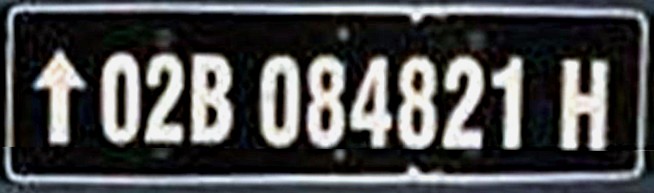 |
Important Clarifications
- Temporary registration plates now follow red text on yellow background per the 2020 MoRTH notification. Older references showing red-on-white are outdated.
- Military/Defence plates are outside civilian RTO rules and follow the Ministry of Defence format (broad-arrow prefix).
- Government vehicles (e.g., those used by central or state departments) often use red plates with white text, distinct from private or commercial vehicles. These are assigned for official use and do not follow normal RTO numbering schemes.
- Under CMVR, rental or self drive vehicles are supposed to use a black plate with yellow lettering. However, compliance and enforcement vary across states — some rental cars still use private white plates, which may not be legal for hire use.
Font, Size, and Material Regulations
All Indian vehicles mandated to have HSRPs must follow strict specifications for material, font, dimensions, and security features. These standards ensure uniform visibility, authenticity, and tamper resistance across the country.
|
|
|
|---|---|
| Material | 1 mm aluminium with reflective sheeting |
| Plate Construction | Single unit, rounded corners (~10 mm), embossed border; stickers/adhesive labels prohibited |
| Country Code | “IND” in blue on left side |
| Security Features | Chromium hologram, laser-branded permanent ID; issued by authorised manufacturers only |
| Mounting | Rear plate fixed with non-removable snap-lock fittings |
| Plate Dimensions | - Two-/three-wheelers: 200×100 mm - Cars/Light Vehicles: 340×200 mm or 500×120 mm - Medium/Heavy/Trailers: 340×200 mm |
Special Number Plates
Special number plates are issued for specific vehicle categories or administrative purposes and follow rules that differ from standard civilian registrations while still remaining within the national regulatory framework.
Vanity or Fancy Number Plates - Rules and Availability
MoRTH strengthened plate-standardisation rules through a notification amending the CMVR Rule 50. Here is what is allowed and what remains prohibited:
| Characters & Language | English letters (A–Z) and Arabic numerals (0–9) only | Regional language characters, symbols, additional words, titles, or logos |
| Fonts | Standard HSRP‑prescribed “IND” font with uniform size | Fancy fonts, stylized letters, italics, cursive, or decorative lettering |
| Plate Material | Aluminium HSRP plate with reflective sheeting | Plastic plates, paper plates (except temporary slips where permitted), printed stickers (except authorised BS‑VI sticker) |
| Security Features | HSRP with chromium hologram, laser‑etched permanent unique code, non‑removable snap‑lock | Duplicate or tampered holograms, removable plates, screw‑on fake HSRP holograms |
| Colour Coding | Standard background/text colours prescribed for each vehicle category (e.g., black on white for private vehicles) | Non‑standard colours, inverted schemes, extra graphics, or logos other than “IND” and hologram |
| Number Customization | Purchasing “special/lucky numbers” through authorised state auctions (number only; plate design remains standard) | Designing or modifying layout, manipulating spacing to spell words, altering alignment to resemble names |
| Display Rules | Plate must be affixed at front and rear; motorcycles may use a single rear plate only where permitted | Using windshield stickers as substitutes, having only a single plate where not allowed, hiding the plate |
| standard front plate or side-mounted plate as allowed | covering, or tampering with plates |
VIP and Defence Service Number Plates
Vehicles of the Indian Armed Forces use a separate registration system managed by MoD; their number plates begin with a broad arrow (↑), followed by the procurement year, a base/vehicle class code, a unique serial number and a suffix — a format designed to clearly distinguish defence vehicles from civilian ones. VIP vehicles (such as those of the President, Vice President and Governors) were previously sometimes assigned emblem only “red plates,” but a 2018 Delhi High Court ruling mandated that all such vehicles be registered and display standard plates under the law. There is no official rule granting traffic law exemptions or automatic privileges based solely on the design of a number plate.
Regional Differences and State-specific Practices
While the registration plate format is nationally standardised by MoRTH, some states have experimented with minor modifications (for example, using a single state wide code rather than district wise codes). Enforcement and compliance are managed by state transport departments and police, so in practice there may be variation in how strictly rules are enforced or penalties applied. However, the base registration structure remains uniform under central regulation.
How to Obtain and Register Number Plates
Registering a vehicle in India ensures legal compliance, enabling road use, identification, and adherence to safety and taxation regulations.
Process for Private and Commercial Vehicles
All vehicles in India must be registered under the Motor Vehicles Act before road use. The standard steps are:
- Submit Application: Complete Form 20 at the local RTO with documents such as sale certificate, insurance, and proof of address.
- Vehicle Verification: RTO inspects the vehicle for compliance with safety and legal standards.
- Pay Fees and Taxes: Applicable registration charges and road taxes are paid.
- Registration Number Assignment: Vehicle receives a unique registration number.
- Issue RC and Plates: Permanent Registration Certificate (RC) and high-security plates (HSRP or standard) are issued.
- Temporary Registration: New vehicles may receive temporary registration under CMVR Section 43 until permanent registration is completed.
Temporary and Export Registration Procedures
A new vehicle may receive temporary registration through Form 20, normally valid for up to one month while permanent registration is processed; extensions apply mainly to chassis awaiting body-fitting. Owners must obtain permanent registration before temporary validity expires.
Export of an Indian-registered vehicle is not governed by CMVR; instead, it is processed under customs and Directorate General of Foreign Trade procedures applicable to goods. No separate “export registration plate” exists under Indian vehicle-registration law.
Fines and Penalties for Wrong or Missing Plates
All motor vehicles in India must be registered and carry a valid registration mark before being driven in public, as per Sections 39 and 192 of the Motor Vehicles Act. Violations are punishable, with penalties increasing for repeated offences.
| Driving without registration / registration mark | Sections 39 & 192, MVA 1988 | First offence: ₹2,000–₹5,000 fine and/or imprisonment up to 3 months |
| Second / subsequent offences | Sections 39 & 192, MVA 1988 | Fine up to ₹10,000 and/or imprisonment up to 1 year |
| Number-plate violations (missing, tampered, non-standard) | State/City traffic rules | Fines and penalties as prescribed locally, in addition to central law |
Technological Advances in Number Plates
Modern security features and smart technologies are reshaping vehicle identification systems, providing enhanced security and improved tracking capabilities for law enforcement and vehicle owners.
High Security Registration Plates (HSRP)
Under MoRTH rules, all vehicles sold from HSRPs are 1.0 mm aluminium plates with retro reflective sheeting, a hot stamped “IND/INDIA” mark, a chromium hologram, a laser etched permanent identification number, and non removable snap locks. These security features reduce plate tampering, curb vehicle theft or fraud, enable reliable vehicle identification, and support integration with automated number plate recognition systems.
Smart Number Plates and Future Trends
India does not yet have a formal “smart number plate” program. High Security Registration Plates (HSRP) standardisation supports automated recognition through ANPR cameras and FASTag-enabled tolling at pilot locations. These pilots demonstrate potential for barrier-free toll collection and enhanced traffic management, but nationwide deployment of RFID- or GPS-enabled plates has not been officially announced.
Protecting Your Vehicle with Royal Sundaram
Understanding the different types of number plates in India — from private, commercial, and electric vehicle plates to temporary registrations and HSRPs — ensures legal compliance and safer driving. However, plate based compliance and following registration rules alone cannot protect your vehicle from accidents, theft, fire, or natural disasters. For full security and peace of mind, a robust motor insurance policy matters.
Royal Sundaram offers comprehensive car and bike insurance plans covering third party liabilities, own damage protection, theft, fire, natural disasters, and personal accident cover for the owner/driver. Its wide network of cashless garages and easy online claims process simplifies procedures and ensures you stay on the road with confidence.
By combining knowledge of India’s number plate regulations with Royal Sundaram’s insurance cover, you get not just legal compliance but also a shield against unexpected risks.
FAQs
There are seven types of number plates in India. These are colour coded: white (private), yellow (commercial), green (electric), black (rental/self drive), blue (diplomatic), red on yellow (temporary), plus special format plates for defence and official vehicles.
Plate background and text colours reflect vehicle function: e.g. white black for private, yellow black for commercial, green white/yellow for EVs, red yellow for temporary, etc.
An HSRP is a tamper proof aluminium plate with laser etched code and hologram. It is mandatory for all vehicles under central rules.
You cannot legally use a “fancy” or personalised design for the physical number plate of a vehicle in India. Plates must follow the standard format as required under the Motor Vehicles Act and CMVR. However, you can obtain a 'fancy' or 'VIP' registration number (for instance, repeating digits or memorable combos) through official channels such as state level RTO auctions or allotments.
Driving without a valid registration mark or with incorrect/invalid plates is an offence under the law; penalties depend on the offence and ownership.
Temporary plates are issued for new vehicles and are valid until permanent registration is completed.
Yes. Battery operated vehicles get green background plates with white letters for private EVs, yellow for commercial EVs.


Discover the perfect insurance plan for you!
Get your free quote now!
Get StartedBy Clicking on Get Started, You agree to our Terms and Conditions and override DNC/NDNC registration.
More like this
View more


.png)